|
|
|
Invited SpeakersHélène Gispert Hélène Gispert is a historian of mathematics and professor emerita at Paris-Saclay University. She is currently conducting research, both in an academic and trade union context, on the theme of ‘Women – Knowledge – Power’. She is co-author of an article entitled « Le genre académique – Prendre la mesure de l’avantage masculin dans les sciences », to be published in the journal Zilsel – Sociologie, histoire, anthropologie et philosophie des sciences et des techniques (Zilsel, 17, 2026/1).
Title: The issue of professional gender equality - questioning "excellence" and the illusions of male-normed success. Abstract: Professional equality between women and men in academic research can be examined through multiple dimensions: activities, careers, remuneration (salaries and bonuses)... I have chosen to approach this issue through the lens of scientific excellence and its implications for professional success. Drawing on research by specialists in gender studies – historians, sociologists, economists, and political scientists – I argue that excellence is a deeply gendered construction, built upon sex-divided academic labor, male-normed standards of success, and the myth of meritocracy. Rather than settling for an elitist equality that benefits only a privileged few, the challenge now is to formulate and establish gender-neutral norms that transform academic structures.
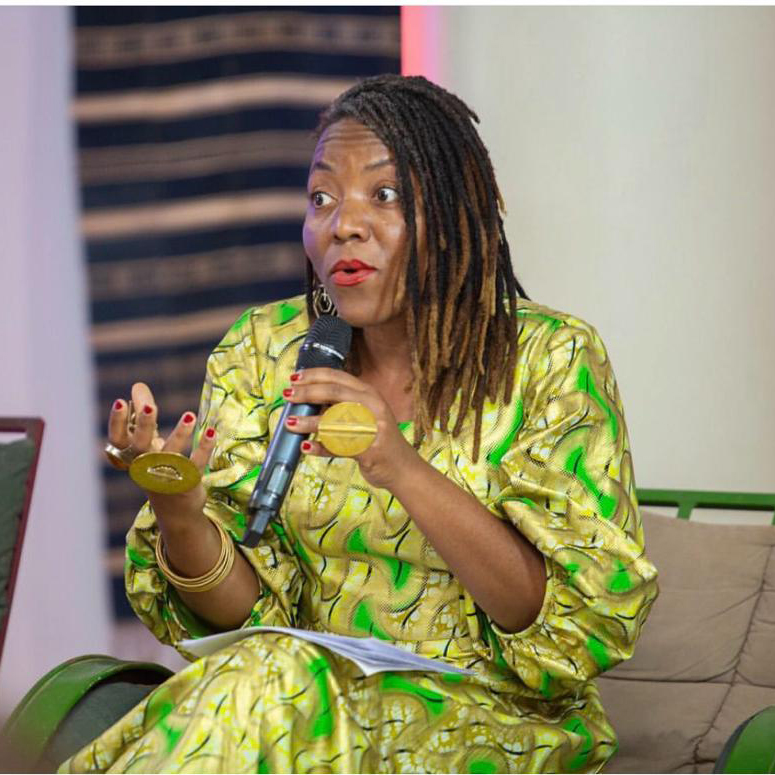
Odome Angone
Odome Angone is an Associate Professor at Cheikh Anta Diop University in Dakar (UCAD), where she teaches the sociology of identity within Hispano-African and Afro-Spanish literatures. Her interdisciplinary research focuses on endogenous knowledge and advocates for epistemic justice.
Title: Agnotology or Selective Ignorance as a Tool of Power: Cultural Hegemony, Hidden Curriculum, and Epistemic Injustices Abstract: Since joining Cheikh Anta Diop University in 2015, my research has focused on epistemic justice, with the ambition of reconciling scientific production and societal challenges. Through an intersectional lens, I examine the persistence of sexist, racist, and neo-colonial biases within the academic institution. My approach is driven by the need for legitimation for marginalized groups, whose status remains precarious due to rigid normative structures. I argue that despite its image as an epicenter of neutrality, the University remains a site for the reproduction of social inequalities, often masking ideologies rooted in epistemic regimes that perpetuate the scientific divide between the North and the South. This contribution thus aims to unmask the mechanisms of selective ignorance that transform the institution into a vehicle for cultural hegemony, to the detriment of truly inclusive science.
|